CCMA, CMA, or RMA? Choosing a Medical Assistant Certification in Houston
CCMA, CMA, or RMA? Choosing a Medical Assistant Certification in Houston
Medical assistant certification is not one credential — it is several, issued by different organizations, and Houston job postings do not all ask for the same one. Choosing which to pursue, qualifying for it, and keeping it active afterward are three separate decisions, and most guides only cover the first.
According to the U.S. Bureau of Labor Statistics, the median annual wage for medical assistants was $45,690, with employment projected to grow 13 percent from 2025 to 2035 — much faster than the average for all occupations (U.S. Bureau of Labor Statistics, Occupational Outlook Handbook, May 2025).
Key Takeaways
- “Certified medical assistant” describes a credential from a certifying body, not a title the state of Texas grants.
- Houston postings name different credentials; reading which one a posting wants is a skill worth having before you apply.
- Eligibility rules differ by certifying body — some require completing a training program, others accept documented work experience.
- Certification expires. Every credential requires renewal on a cycle, and that obligation starts the day you pass.
What “Certified” Actually Describes
A school does not make you a certified medical assistant. A certifying organization does, after you meet its eligibility requirements and pass its exam. A training program’s job is to get you ready for that exam and for the clinic on the other side of it.
This distinction matters when you are comparing programs in Houston. Any program describing certification as something it awards is worth a second look, because that is not how the credential works.
The Credentials You Will See in Houston Postings
Several organizations certify medical assistants, and their acronyms appear in job listings more or less interchangeably even though they are distinct.
The Certified Clinical Medical Assistant (CCMA) is issued by the National Healthcareer Association. It is the credential Houston Medical Assistant School prepares students for, and it is widely recognized across Texas outpatient care.
You will also see the CMA from the American Association of Medical Assistants, the RMA from American Medical Technologists, and the NCMA from the National Center for Competency Testing. Each sets its own eligibility rules, its own exam, and its own renewal cycle. They are not interchangeable from the certifying body’s side, even when a posting treats them that way.
Before committing to any of them, check the eligibility page on that organization’s own site. Requirements change, and the certifying body is the only authoritative source for its own credential.
How to Read What a Posting Is Actually Asking For
Houston listings fall into roughly three patterns, and telling them apart saves wasted applications.
Some name one credential specifically — “CCMA required” — which is unambiguous. Others list several as acceptable alternatives, which means the employer cares that you are certified, not which body certified you. A third group says “certification required or must obtain within 90 days,” which signals they will consider you mid-process.
That third pattern is worth watching if you are still in training, because it is the one that lets you apply before the exam is behind you.
Why Employers Require It When Texas Does Not
Texas does not license or register medical assistants. No state law requires you to hold any credential to work as one.
The requirement comes from employers, and on clinical medical assistant postings across Houston it is close to universal. In practice the credential functions as a screening line — it determines whether your application gets read, not what you are paid.
Because Texas physicians delegate clinical tasks under their own authority, scope-of-practice questions are settled by the employer and the Texas Medical Board rather than by which certification you hold. Verify any specific task question there.
Eligibility: What Gets You Through the Door
For the CCMA, eligibility requires a high school diploma or GED plus completion of a medical assistant training program within the last five years, or documented work experience in the field.
That second path matters less than it sounds for career changers. If you are coming from retail, logistics, food service, or an office job — which describes most of each cohort — the training route is the practical one, because the work-experience path requires clinical hours you do not yet have.
What the Exam Covers
The CCMA exam is organized into domains: foundational knowledge, anatomy and physiology, clinical patient care, patient care coordination, administrative assisting, communication, and medical law and ethics.
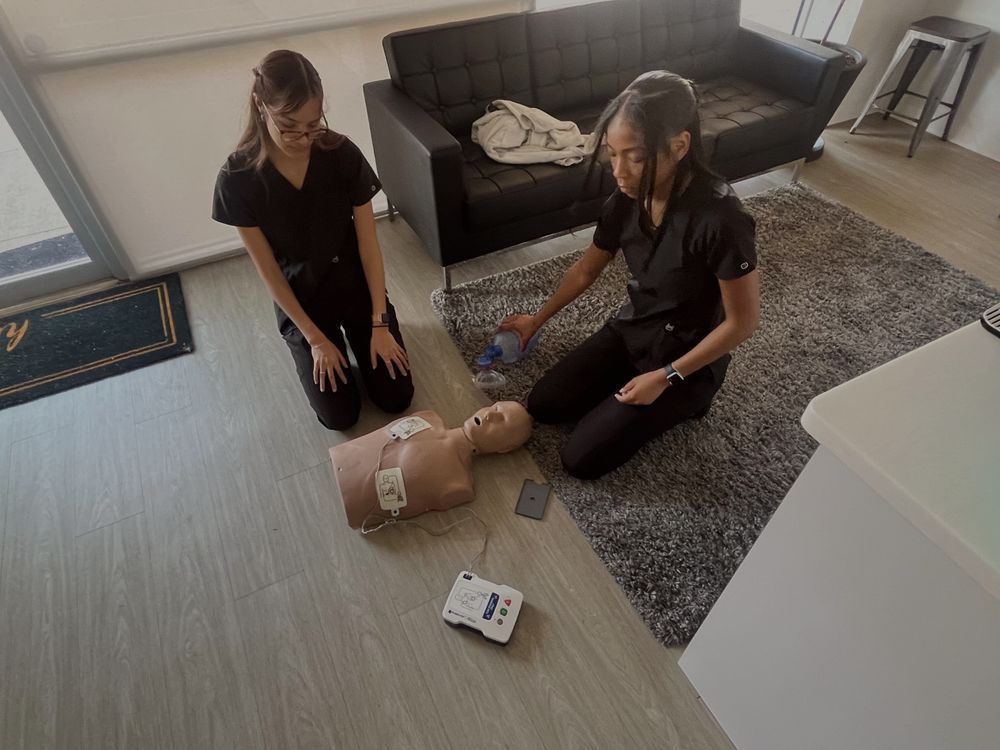
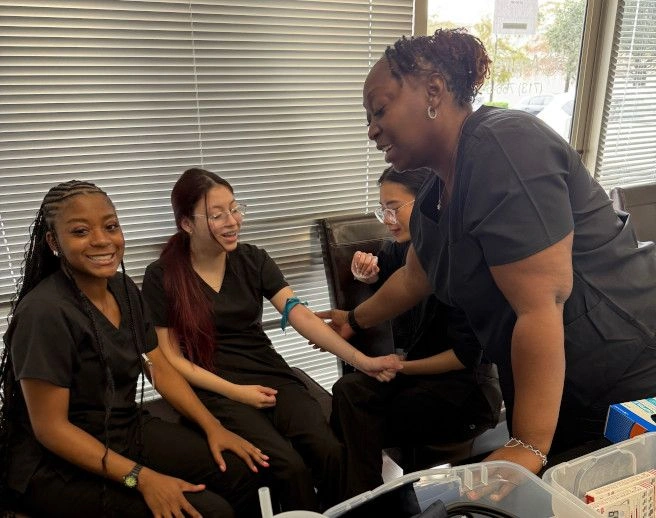
Clinical patient care is the largest section, which is the argument for hands-on hours over lecture hours. At Houston Medical Assistant School that means one 4.5-hour lab every Saturday inside a working medical office — venipuncture and order of draw, electrocardiograms, injections and medication administration, urinalysis and rapid testing, infection control and wound care, and electronic health record charting.
Marisol managed a restaurant in Spring Branch for nine years before enrolling. She did coursework on weeknights and used Saturdays for the parts that cannot be learned from a screen.
Keeping It Current After You Pass
Certification is not permanent. Every credentialing body requires renewal on a recurring cycle, generally involving continuing education and a renewal fee.
This is the part new medical assistants most often overlook, because the obligation starts quietly the day you pass. Note your renewal date when the certificate arrives and check your certifying body’s requirements then, not two years later. Letting a credential lapse means dealing with reinstatement rules rather than a simple renewal.
Where Training Fits in Houston
The program runs 18 weeks and is hybrid: coursework online during the week, plus the Saturday lab. Students become eligible to begin their 80-hour externship after week 8, which is when the schedule changes shape — externship hours happen on weekdays in a working medical office.
Seven campuses run the program: Cypress, Katy, Kingwood, Pasadena, Pearland, Sugar Land, and Tomball. Since the Saturday lab is the fixed in-person commitment, choose for the drive you can sustain on a weekend morning for 18 straight weeks.
Graduates receive a certificate of completion and a BLS (CPR) card, and hold the CCMA credential once they pass the NHA exam.
Tuition is $4,950, payable in full or across a payment plan: $1,950 down with weekly payments of $183.33 over 18 weeks, or $950 down with weekly payments of $238.89. Current terms are posted on the tuition page. Tuition Savings may be available depending on your start date; ask admissions what applies to yours.
Frequently Asked Questions
Which certification should I get?
Start with what Houston postings in your target setting name most often, then confirm you meet that body’s eligibility rules. Houston Medical Assistant School prepares students for the NHA CCMA, which is widely recognized across Texas outpatient care.
Can I get certified without completing a program?
Some certifying bodies allow eligibility through documented clinical work experience. For a career changer with no clinical background, the training route is the practical path, since the experience route requires hours you would need a clinical job to accumulate.
How soon after finishing should I sit for the exam?
Sooner is better. The material is freshest right after you have used it during your externship, and students who wait several months generally re-review content they already knew.
Do I need healthcare experience to enroll?
No. No prior healthcare experience is required. Most students come from other industries entirely.
Getting Started in Houston
Certification is a sequence of decisions, not a single one: which credential, how you qualify, when you sit, and what keeps it active afterward. Knowing all four before you enroll is what keeps the process from surprising you.
Ready to start your medical assistant career in Houston? Explore the Houston Medical Assistant School program and take the first step today.
You're only a few months from the medical assistant career you deserve.