What to Look for in a Medical Assistant Training Program Before You Enroll
Picking a medical assistant training program is a bigger decision than it might look on the surface. The options range from accelerated 12-week programs to two-year associate degrees, from under $3,000 to over $30,000, from genuinely clinical to mostly theoretical. The salary you earn after graduating is roughly the same across all of them — which means the differences in cost and time come almost entirely from the program’s structure, not its outcomes.
Here’s a direct breakdown of what actually matters when evaluating a medical assistant training program — and what to ignore.
What actually predicts career readiness
1. Where does hands-on training happen?
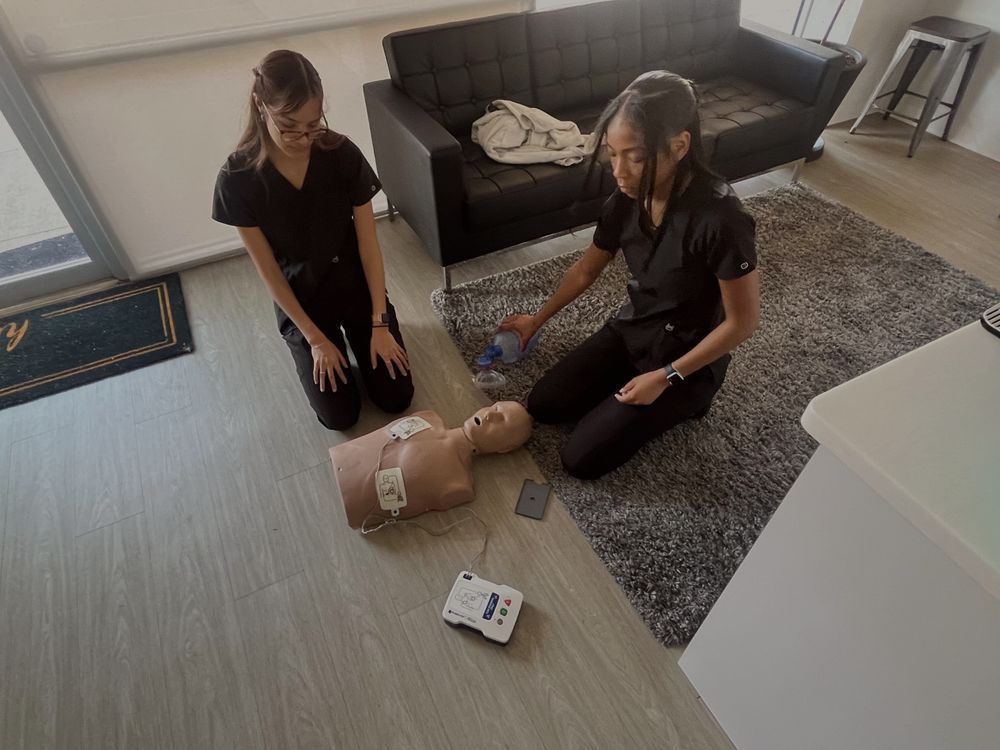
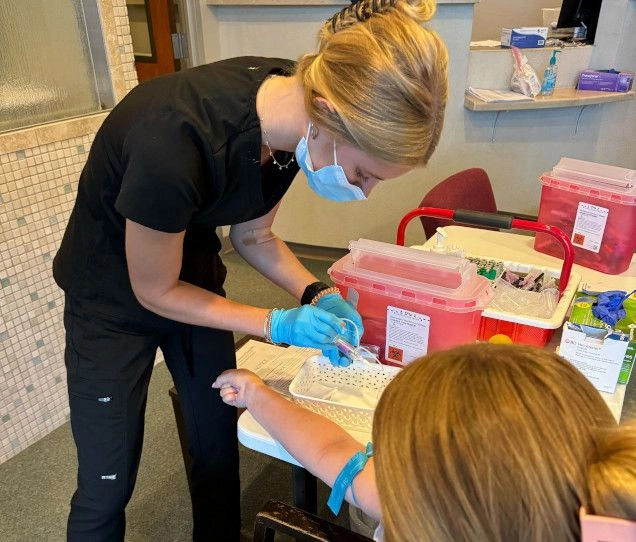
Clinical skills are the core of the medical assistant role — phlebotomy, EKGs, injections, patient prep, vital signs. These skills require physical, supervised practice to develop. The question is where that practice happens.
Real medical offices: Students practice in functioning clinical environments with real equipment, real patient workflows, and real clinical dynamics. This is what prepares you to contribute from day one on the job.
Campus simulation labs: Students practice in rooms designed to look like medical offices. These environments are useful introductory tools, but they don’t replicate the pace, workflow, and interpersonal demands of a real clinical setting.
Programs with externships in actual medical offices — or that conduct in-person lab days at partner medical practices — produce measurably more job-ready graduates. Ask specifically: Do students train in real medical offices? Follow up if the answer references “our facility” or “our simulation lab.”
2. Is CCMA certification prep integrated throughout?
The CCMA credential from the NHA is the most widely accepted MA certification. Employers use it to screen applications, and certified MAs earn $2,000–$6,000/year more at entry level than non-certified ones (Indeed and Glassdoor, 2026).
A program that integrates CCMA exam prep from the beginning — mapping every module to exam content — produces better-prepared graduates than one that tacks on a review session at the end. Ask whether exam preparation is built into the curriculum week by week, and whether the exam fee is included in tuition.
3. What is the total all-in cost?
Program fees often don’t represent the full cost. Before comparing programs, get the complete number:
- Tuition
- Equipment and supply kit
- Textbooks and course materials
- CCMA exam fee (approximately $135–$155 through the NHA)
- Registration, technology, or access fees
Then consider the debt question. Programs that accept federal financial aid often have higher tuition — because aid access allows schools to charge more. Programs that keep tuition low and offer flexible payment plans instead can be genuinely more affordable, especially if they allow you to graduate debt-free.
4. Is the schedule compatible with your actual life?
Programs that require full-time weekday campus attendance are unavailable to most working adults, parents, and career changers with existing obligations. If you have a job you can’t leave for 6–12 months, you need a program with:
- Online or evening delivery for knowledge-based content
- In-person clinical sessions concentrated on weekends
- A total weekly time commitment sustainable alongside employment
A schedule that forces you to quit your job during training adds financial pressure that affects the entire experience.
5. What is the realistic time from graduation to employment?
Ask specifically: what is the average time from graduation to first job for recent graduates? A program confident in its outcomes will give you a specific answer based on recent cohort data. “Our graduates find positions quickly” is not useful information.
6. Is there career support after graduation?
Resume review, interview preparation, and connections to local medical practices are meaningful post-graduation supports. Ask what’s actually available — not what the brochure says is available.
The financial picture across program types
| Program Type | Typical Cost | Duration | Time to First Job |
|---|---|---|---|
| Accelerated hybrid | $2,990–$6,000 | 12–16 weeks | ~5 months |
| Community college certificate | $3,000–$10,000 | 9–12 months | ~12–14 months |
| Career school certificate | $8,000–$20,000 | 6–12 months | ~9–14 months |
| Associate degree | $15,000–$35,000+ | 18–24 months | ~24–28 months |
The starting salary after graduation is essentially the same across all these program types. It’s determined by your CCMA credential, your clinical skills, and the local market — not the cost or length of your program. Choosing a more expensive, longer option does not produce a higher starting salary.
Common red flags
Evasive answers about clinical training. “We have a clinical training component” is not the same as “students train in real medical offices.” Push for a direct answer.
CCMA certification listed as optional. Credential preparation should be core curriculum — not an elective or add-on. If a program treats it as optional, that tells you something about their graduate outcomes.
Unusually high tuition for a short certificate program. MA training doesn’t need to cost $18,000–$25,000. Programs priced that high are often structured around financial aid disbursement schedules, not student value.
Pressure to enroll before your questions are answered. Programs confident in their quality answer your questions before asking you to commit. Urgency before clarity is a warning sign.
No specific graduate employment data. If a program can’t tell you what the average time from graduation to first job was for recent graduates, ask why. This is basic outcome data that any transparent program should track.
What the job requires — and why training quality matters
Understanding what day-one employment looks like reinforces why program quality is worth scrutinizing:
Clinical skill expectation: Can you draw blood, run a clean EKG, set up a procedure tray, and manage patient intake without constant supervision? Employers in Houston expect functional clinical competency from day one — not a blank slate who needs months of supervised training.
Documentation accuracy: EHR documentation errors are a liability. MAs who arrive knowing how to document accurately, completely, and efficiently are immediately more valuable than those who need to learn on the job.
Patient interaction: Medical assistants are often the patient’s primary point of contact for an entire appointment. Communication skills, anxiety management, and professionalism aren’t personality traits — they’re developed through training and reinforced through real patient contact during externship.
A program that invested in real clinical training, integrated certification prep, and genuine patient contact produces a graduate who meets those day-one expectations. A program that didn’t, doesn’t.
What certified MAs earn in Houston
After completing a quality program and earning the CCMA:
- Entry-level: approximately $36,000–$42,000/year
- National median: approximately $42,000–$46,000/year (BLS, 2026)
- Specialty practices (cardiology, oncology, dermatology): $48,000–$58,000+/year
- Certified premium: approximately $2,000–$6,000/year above non-certified MAs
The BLS projects 15% growth through 2032 — consistent demand in Houston and nationwide.
A checklist before you enroll anywhere
Use this as your final review before committing to any medical assistant training program:
- I’ve confirmed that in-person training happens in real medical offices, not a campus simulation lab
- I have the total all-in cost — tuition, materials, equipment, and exam fees
- I understand whether CCMA prep is integrated throughout or added at the end
- The schedule is compatible with my current work and family obligations
- I have a specific answer about the average time from graduation to employment for recent graduates
- I know what career support is available after I finish
- I understand the debt situation — whether I’ll need loans, and what the repayment looks like
A program that can answer all of these questions clearly, before you enroll, is one worth trusting.
You're only a few months from the medical assistant career you deserve.